Showing posts with label civil rights. Show all posts

Saturday, June 20, 2020

LAWSUIT AGAINST JUDGE ANN MELINDA CRAGGS

Judge Craggs
LAWSUIT AGAINST JUDGE ANN MELINDA CRAGGS

COMPLAINT FOR VIOLATION OF CIVIL RIGHTS AND THE AMERICANS WITH DISABILITIES ACT


1. Jurisdiction and venue arise under litigation in the Florida Fifth Judicial Circuit,

Reverse Mortgage Solutions, Inc. v. Neil J. Gillespie et al., case no. 2013-CA-00115, 
Marion Co. Circuit Court, Fifth Judicial Circuit, Judge Ann Craggs presiding.
Plaintiff’s counsel: Curtis Alan Wilson, McCalla Raymer Leibert Pierce, LLC

and the laws and Constitution of the United States, and Florida, including: 

2. Plaintiff Neil J. Gillespie, age 62, is an indigent nonlawyer, unable to obtain adequate counsel, a consumer of legal and court services affecting interstate commerce, a consumer of personal, family and household goods and services, consumer transactions in interstate commerce, a person with disabilities, a vulnerable adult, reluctantly appears pro se, henceforth in the first person, residing at 8092 SW 115th Loop, Ocala, Marion County, Florida 34481.

3.     Defendant FIFTH JUDICIAL CIRCUIT FLORIDA is a state court of original jurisdiction, with main administrative offices in Ocala at the Marion County Judicial Center, 110 N.W. 1st Avenue, Ocala, FL 34475

7.      Defendant ANN MELINDA CRAGGS, Circuit Court Judge, and Individually, Marion County Judicial Center, 110 N.W. 1st Avenue, Third Floor Courtroom 3B, Ocala, FL 34475 

8. My Florida residential homestead has been in foreclosure on a federal Home Equity Conversion Mortgage, or HECM, a Federal Housing Administration (FHA) "reverse" mortgage program administered by the Secretary, United States Department of Housing and Urban Development (Secretary or HUD) to enable home owners over 62 years old access the subject home's equity. 12 U.S.C. § 1715z20 et seq. and 24 C.F.R. Part 206. The record shows substantial violations of the HECM rules by the HUD-approved lender and lender parties. This foreclosure was filed January 9, 2013 and is entering its sixth year in the Florida Fifth Judicial Circuit, see.

Reverse Mortgage Solutions, Inc. v. Neil J. Gillespie et al., case no. 2013-CA-00115, 
Marion Co. Circuit Court, Fifth Judicial Circuit, Judge Ann Craggs presiding.
Plaintiff’s counsel: Curtis Alan Wilson, McCalla Raymer Leibert Pierce, LLC

9. The Florida Fifth Judicial Circuit is subject to the provisions of the Americans With Disabilities Act (ADA), as amended. 

10. I am age 62. I was determined totally disabled by Social Security as of January 17, 1992.

11. The ADA Coordinator for the Fifth Judicial Circuit for Marion County is Kristina Valdez. I have been in email contact with Ms. Valdez at kvaldez@circuit5.org regarding disability accommodation in this case since at least February 1, 2013.

12. I have repeatedly requested disability accommodation in this case in the Florida Fifth Judicial Circuit and have been denied.

13. Judge Craggs presided over a non-jury trial July 18, 2017 on the foreclosure of my home where I attended without disability accommodation, as described in Affidavit of Neil J. Gillespie Non-Jury Trial July
18, 2017. Paragraph 2 of my Affidavit states: 
2. On July 18, 2017 I was taken by ambulance to the hospital after becoming sick during a non-jury trial on the foreclosure of my home. I was alone and without counsel to represent me. Presiding Judge Ann Melinda Craggs continued the trial without me and ruled for the bank.
The record shows Judge Craggs entered FINAL JUDGMENT OF FORECLOSURE but the Order does not mention that left the hearing while ill and courthouse by ambulance. Also see,
Appendix F: Affidavit of Neil J. Gillespie, Medical Expenses Non-Jury Trial July 18, 2017.
14. The non-jury trial was held in the Marion County Judicial Center, 110 N.W. 1st Avenue, Third Floor Courtroom 3B, Ocala, FL 34475.

15. Most recently I filed a Motion for Disability Accommodation on December 23, 2018 for accommodation on December 31, 2018 during a Case Management Conference in the Marion County Judicial Center, see DEFENDANT NEIL J. GILLESPIE'S MOTION FOR DISABILITY ACCOMMODATION RE: ORDER SCHEDULING CASE MANAGEMENT (WAVER OF CONFIDENTALITY) Filing # 82518052 E-Filed 12/23/2018 08:06:33 PM.

16. Ms. Valdez denied my disability accommodation request on Friday December 28, 2018.

17. Judge Craggs denied my motion for disability accommodation by Order entered on December 28, 2018, see Filing # 82648977 E-Filed 12/28/2018 01:43:23 PM.

18. As a result of being denied disability accommodation, the Fifth Judicial Circuit denied me due process, denied me the protection of the laws and Constitution of the United States, and Florida, and is in the process of wrongly setting a date to sell my home.  

19. The damages in this case exceed $100,000.

WHEREFORE, I seek all damages as permitted by law, actual damages, statutory damages, punitive damages, and attorneys fees for any attorneys who may represent me, or work on my behalf, and costs and expenses, and such other or further relief as is permitted or justified. Read more here

Link to Certified Process Servers, Fifth Judicial Circuit Florida

Saturday, January 6, 2018

3 days into new job, Philadelphia DA Krasner fires 31 staff members

Larry Krasner
3 days into new job, Philadelphia DA Krasner fires 31 staff members
ABA Journal Daily News
By Jason Tashea
January 5, 2018


New Philadelphia District Attorney Larry Krasner fired 31 members of the office three days into the job.

The move makes "clear his intention to take the office in a different direction," spokesman Ben Waxman told philly.com.

Before winning the election last year, Krasner was a civil rights attorney who often sued the government, including law enforcement. He also defended activists, like those arrested at the 2000 Republican National Convention, and protesters from the Black Lives Matter movement.

The Philadelphia District Attorney’s office employs about 600 people, half of whom are prosecutors. While names of those fired were not released, reports state that the people pushed out Friday could account for up to 10 percent of the prosecutorial staff.

Homicide prosecutor Andrew Notaristefano, who was actively preparing a case, told philly.com he received "no explanation" for being let go. Notaristefano also says his request to speak with Krasner about the firing was denied.

After Krasner took the oath of office on Tuesday, he said, "A movement was sworn in today… A movement for criminal justice reform that has swept Philadelphia … and is sweeping the United States."

Krasner was financially supported in part by George Soros, a billionaire who has started to invest in local district attorney races to promote progressive criminal justice reform and minority candidates. Since 2015, Soros has spent at least $3 million dollars on electing prosecutors, according to Politico.

Krasner takes over an office that’s not been without controversy. Seth Williams, the previously elected district attorney, resigned from office and plead guilty to federal bribery charges last June.

The District Attorney’s office had not yet released a statement on the firings as of Friday evening. Read more
_________________________________________________________

George Soros
George Soros' quiet overhaul of the U.S. justice system
politico.com
By SCOTT BLAND
August 30, 2016


Progressives have zeroed in on electing prosecutors as an avenue for criminal justice reform, and the billionaire financier is providing the cash to make it happen.

While America’s political kingmakers inject their millions into high-profile presidential and congressional contests, Democratic mega-donor George Soros has directed his wealth into an under-the-radar 2016 campaign to advance one of the progressive movement’s core goals — reshaping the American justice system.

The billionaire financier has channeled more than $3 million into seven local district-attorney campaigns in six states over the past year — a sum that exceeds the total spent on the 2016 presidential campaign by all but a handful of rival super-donors.

His money has supported African-American and Hispanic candidates for these powerful local roles, all of whom ran on platforms sharing major goals of Soros’, like reducing racial disparities in sentencing and directing some drug offenders to diversion programs instead of to trial. It is by far the most tangible action in a progressive push to find, prepare and finance criminal justice reform-oriented candidates for jobs that have been held by longtime incumbents and serve as pipelines to the federal courts — and it has inspired fury among opponents angry about the outside influence in local elections.

"The prosecutor exercises the greatest discretion and power in the system. It is so important," said Andrea Dew Steele, president of Emerge America, a candidate-training organization for Democratic women. "There’s been a confluence of events in the past couple years and all of the sudden, the progressive community is waking up to this."

Soros has spent on district attorney campaigns in Florida, Illinois, Louisiana, Mississippi, New Mexico and Texas through a network of state-level super PACs and a national "527" unlimited-money group, each named a variation on "Safety and Justice." (Soros has also funded a federal super PAC with the same name.) Each organization received most of its money directly from Soros, according to public state and federal financial records, though some groups also got donations from nonprofits like the Civic Participation Action Fund, which gave to the Safety and Justice group in Illinois. Read more

Sunday, June 18, 2017

Trump administration quietly rolls back civil rights efforts across federal government

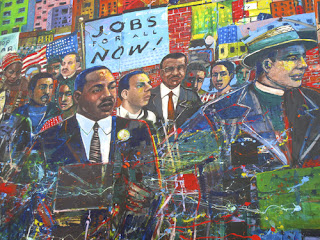
Civil rights mural
Trump administration quietly rolls back civil rights efforts across federal government
 
American Bar Association (ABA)
By Jessica Huseman and Annie Waldman, ProPublica
Jun 16, 2017 08:00 am CDT


For decades, the Department of Justice has used court-enforced agreements to protect civil rights, successfully desegregating school systems, reforming police departments, ensuring access for the disabled and defending the religious.

Now, under Attorney General Jeff Sessions, the DOJ appears to be turning away from this storied tool, called consent decrees. Top officials in the DOJ civil rights division have issued verbal instructions through the ranks to seek settlements without consent decrees — which would result in no continuing court oversight.

The move is just one part of a move by the Trump administration to limit federal civil rights enforcement. Other departments have scaled back the power of their internal divisions that monitor such abuses. In a previously unreported development, the Education Department last week reversed an Obama-era reform that broadened the agency’s approach to protecting rights of students. The Labor Department and the Environmental Protection Agency have also announced sweeping cuts to their enforcement.

"At best, this administration believes that civil rights enforcement is superfluous and can be easily cut. At worst, it really is part of a systematic agenda to roll back civil rights," said Vanita Gupta, the former acting head of the DOJ’s civil rights division under President Barack Obama.

Consent decrees have not been abandoned entirely by the DOJ, a person with knowledge of the instructions said. Instead, there is a presumption against their use — attorneys should default to using settlements without court oversight unless there is an unavoidable reason for a consent decree. The instructions came from the civil rights division’s office of acting Assistant Attorney General Tom Wheeler and Deputy Assistant Attorney General John Gore. There is no written policy guidance.

Devin O’Malley, a spokesperson for the DOJ, declined to comment for this story.

Consent decrees can be a powerful tool, and spell out specific steps that must be taken to remedy the harm. These are agreed to by both parties and signed off on by a judge, whom the parties can appear before again if the terms are not being met. Though critics say the DOJ sometimes does not enforce consent decrees well enough, they are more powerful than settlements that aren’t overseen by a judge and have no built-in enforcement mechanism.

p>Such settlements have "far fewer teeth to ensure adequate enforcement," Gupta said.

Consent decrees often require agencies or municipalities to take expensive steps toward reform. Local leaders and agency heads then can point to the binding court authority when requesting budget increases to ensure reforms. Without consent decrees, many localities or government departments would simply never make such comprehensive changes, said William Yeomans, who spent 26 years at the DOJ, mostly in the civil rights division.

"They are key to civil rights enforcement," he said. "That’s why Sessions and his ilk don’t like them."

Some, however, believe the Obama administration relied on consent decrees too often and sometimes took advantage of vulnerable cities unable to effectively defend themselves against a well-resourced DOJ.

"I think a recalibration would be welcome," said Richard Epstein, a professor at New York University School of Law and a fellow at the Hoover Institution at Stanford, adding that consent decrees should be used in cases where clear, systemic issues of discrimination exist.

Though it’s too early to see how widespread the effect of the changes will be, the Justice Department appears to be adhering to the directive already.

On May 30, the DOJ announced Bernards Township in New Jersey had agreed to pay $3.25 million to settle an accusation it denied zoning approval for a local Islamic group to build a mosque. Staff attorneys at the U.S. attorney’s office in New Jersey initially sought to resolve the case with a consent decree, according to a spokesperson for Bernards Township. But because of the DOJ’s new stance, the terms were changed after the township protested, according to a person familiar with the matter. A spokesperson for the New Jersey U.S. attorney’s office declined comment.

Sessions has long been a public critic of consent decrees. As a senator, he wrote they "constitute an end run around the democratic process." He lambasted local agencies that seek them out as a way to inflate their budgets, a "particularly offensive" use of consent decrees that took decision-making power from legislatures.

On March 31, Sessions ordered a sweeping review of all consent decrees with troubled police departments nationwide to ensure they were in line with the Trump administration’s law-and-order goals. Days before, the DOJ had asked a judge to postpone a hearing on a consent decree with the Baltimore Police Department that had been arranged during the last days of the Obama administration. The judge denied that request, and the consent decree has moved forward.

The DOJ has already come under fire from critics for altering its approach to voting rights cases. After nearly six years of litigation over Texas’ voter ID law — which Obama DOJ attorneys said was written to intentionally discriminate against minority voters and had such a discriminatory effect — the Trump DOJ abruptly withdrew its intent claims in late February.

Attorneys who worked on the case for years were barely consulted about the change — many weren’t consulted at all, according to two former DOJ officials with knowledge of the matter. Gore wrote the filing changing the DOJ’s position largely by himself and asked the attorneys who’d been involved in the case for years to sign it to show continuity. Not all of the attorneys fell in line. Avner Shapiro — who has been a prosecutor in the civil rights division for more than 20 years — left his name off the filings written by Gore. Shapiro was particularly involved in developing the DOJ’s argument that Texas had intentionally discriminated against minorities in crafting its voter ID legislation.

"That’s the ultimate act of rebellion," Yeomans, the former civil rights division prosecutor, said. A rare act, removing one’s name from a legal filing is one of the few ways career attorneys can express public disagreement with an administration.

Gore has no history of bringing civil rights cases. A former partner at the law firm Jones Day, he has instead defended states against claims of racial gerrymandering and represented North Carolina when the state was sued over its controversial "bathroom bill," which requires transgender people to use the facility that matched their birth gender.

All of the internal changes at the DOJ have left attorneys and staff with "a great deal of fear and uncertainty," said Yeomans. While he says the lawyers there would like to stay at the department, they fear Sessions’ priorities will have devastating impact on their work.

The DOJ’s civil rights office is not alone in fearing rollbacks in enforcement. Across federal departments, the Trump administration has made moves to diminish the power of civil rights divisions.

The Department of Education has laid out plans to loosen requirements on investigations into civil rights complaints, according to an internal memo sent to staff on June 8 and obtained by ProPublica.

Under the Obama administration, the department’s office for civil rights applied an expansive approach to investigations. Individual complaints related to complex issues such as school discipline, sexual violence and harassment, equal access to educational resources, or racism at a single school might have prompted broader probes to determine whether the allegations were part of a pattern of discrimination or harassment.

The new memo, sent by Candice Jackson, the acting assistant secretary for civil rights, to regional directors at the department’s civil rights office, trims this approach. Jackson was appointed deputy assistant secretary for the office in April and will remain as the acting head of the office until the Senate confirms a full-time assistant secretary. Trump has not publicly nominated anyone for the role yet.

The office will apply the broader approach "only" if the original allegations raise systemic concerns or the investigative team argues for it, Jackson wrote in the memo.

As part of the new approach, the Education Department will no longer require civil rights investigators to obtain three years of complaint data from a specific school or district to assess compliance with civil rights law.

Critics contend the Obama administration’s probes were onerous. The office "did such a thorough review of everything that the investigations were demanding and very expensive" for schools, said Boston College American politics professor R. Shep Melnick, adding that the new approach could take some regulatory pressure off schools and districts.

But some civil rights leaders believe the change could undermine the office’s mission. This narrowing of the department’s investigations "is stunning to me and dangerous," said Catherine Lhamon, who led the Education Department’s civil rights office from August 2013 until January 2017 and currently chairs the United States Commission on Civil Rights. "It’s important to take an expansive view of the potential for harm because if you look only at the most recent year, you won’t necessarily see the pattern," said Lhamon.

The department’s new directive also gives more autonomy to regional offices, no longer requiring oversight or review of some cases by department headquarters, according to the memo.

The Education Department did not respond to ProPublica’s request for comment.

Education Secretary Betsy DeVos has also proposed cutting over 40 positions from the civil rights office. With reduced staff, the office will have to "make difficult choices, including cutting back on initiating proactive investigations," according to the department’s proposed budget.

Elsewhere, Trump administration appointees have launched similar initiatives. In its 2018 fiscal plan, the Labor Department has proposed dissolving the office that handles discrimination complaints. Similarly, new leadership at the Environmental Protection Agency has proposed entirely eliminating the environmental justice program, which addresses concerns that almost exclusively impact minority communities. The Washington Post reports the plan transfers all environmental justice work to the Office of Policy, which provides policy and regulatory guidance across the agency.

Mustafa Ali, a former EPA senior adviser and assistant associate administrator for environmental justice who served more than 20 years, quit the agency in protest days before the plan was announced. In his resignation letter, widely circulated in the media, Ali suggested the new leadership was abandoning "those who need our help most." Read more

Ryan Gabrielson contributed to this report.

ProPublica is a Pulitzer Prize-winning investigative newsroom. Sign up for their newsletter.

Friday, November 11, 2016

Dear Attorney General Lynch and FBI Director Comey


Loretta E. Lynch, U.S. Attorney General                 James Comey, FBI Director
U.S. Department of Justice                                      Federal Bureau of Investigation
950 Pennsylvania Avenue, NW                                935 Pennsylvania Avenue, NW
Washington, DC 20530-0001                                  Washington, D.C. 20535-0001
https://www.justice.gov/                                            http://www.fbi.gov/
VIA UPS No. 1Z64589FNW92981779                  VIA UPS No. 1Z64589FNT91324183

Dear AG Lynch, and Director Comey:                    September 22, 2016

The Ocala Star-Banner reported January 29, 2016, "Racial incident at West Port: 3 students face discipline after taunts while waiving Confederate flags." Meanwhile, the black schoolgirl being intimidated by white supremacists with Confederate flags was wrongly cited in lieu of arrest.

U.S. Attorney Lee Bentley has jurisdiction, but there is no evidence USAFLM Bentley sought justice for the black schoolgirl intimidated by white supremacists with Confederate flags.

Fine, I bear witness to the ongoing plague of white supremacy racism in central Florida. Enclosed is my complaint to The Florida Bar against School Board attorney Steven Eleazer Lake for white supremacy racial discrimination, and obstruction of justice for concealing records.

The Ocala Police Department has not provided records for the "Racial incident at West Port: 3 students face discipline after taunts while waiving Confederate flags." See enclosed.  

In my view this offense was a hate crime under FS § 775.085 Evidencing prejudice while committing offense; reclassification, because the offense involved the race/color of the black student by three white students who used Confederate flags in a threat of force, to injure, intimidate or interfere with the black student while she was engaged in a federally protected activity, attending public school. 18 U.S.C. § 245. The black schoolgirl was justified in punching the perpetrator(s) under FS § 776.012(1), use or threatened use of force in defense of person.

My Statement Of Candidacy (for president) appears on the Federal Elections Commission website. It was accepted by the FEC on September 11, 2016, FEC-1098470, Candidate ID P60022993. If elected, I plan, inter alia, a new type of Reconstruction for certain parts of the South, to protect the rights of African-Americans forgotten by the US Department of Justice.

A joint statement by the American Bar Association and the NAACP Legal Defense and Educational Fund addressing the "troubling and destabilizing loss of public confidence in the American criminal justice system" is enclosed as part of the Florida Bar complaint. Thank you.

Sincerely,

Neil J. Gillespie, 8092 SW 115th Loop, Ocala, Florida 34481, Email: neilgillespie@mfi.net


Wednesday, June 19, 2013

Friday, September 21, 2012

U.S. Supreme Court GRANTED my Rule 13.5 Application!

Justice Thomas granted my Rule 13.5 Application to extend time to file a petition for writ of certiorari to the U.S. Supreme Court in C.A.11 cases 12-11028 and 12-11213. On September 13, 2012, Application 12A215 was granted by Justice Thomas extending the time to file until December 10, 2012. Link to the decision.

My Rule 13.5 Application is posted on Scribd.